

About Spot-On Home Improvements
Meet the OwnerThe Spot-On Philosophy
Craftsmanship. Decency. Transparency.
By Damian Johnson
What makes a remodeling company worth inviting into your home? I believe it comes down to the quality of the work, the people doing it, and the way you’re treated throughout the process. I started Spot-On Home Improvements in 2013. These are my answers to ten questions about the lessons, challenges, decisions and projects that have shaped the company.
We serve homeowners throughout Cleveland and Akron, Ohio and surrounding cities, specializing in meaningful kitchen, bathroom and home remodeling projects. Our kitchen remodeling and bathroom remodeling work is built around the way people actually use their homes.
Discuss Your Remodeling Project Call 330-283-8029
Ten questions. Straight answers.
Select any question to read my full answer. These are the kinds of conversations I want homeowners to feel comfortable having with us.
1. What makes Spot-On different from other remodeling contractors?
I don’t believe two remodeling projects should ever be approached exactly the same way. Every homeowner has different needs, wants, priorities and expectations. My job is to listen carefully and understand not only what someone wants a room to look like, but how they actually live in it. Then we look at design, layout, function, materials and budget together. Sometimes a small change to the original idea makes a tremendous difference in how well the finished space works. I want homeowners to feel that we’ve thought through their project with them, rather than simply sold them a standard package. A beautiful remodel is important. A beautiful remodel that works for the people living there is better.
2. Do you ever recommend a different product or design than a homeowner initially requests?
Absolutely, although listening comes first. I’ll explain why a material or layout might not be the best choice for that particular home. For example, butcher-block countertops can look terrific, but certain finishes need regular oiling and care. In a rental property, where tenants may not maintain the surface, that can be a poor long-term fit. The same principle applies to a curbless shower. It can be an excellent design, but a small bathroom doesn’t always have the available floor area, slope or drainage conditions to make it practical without additional work. That doesn’t mean it can never be done; it means we need to evaluate the specific room. I’d rather explain a concern before construction than have someone discover it after spending the money.
3. What are the behind-the-scenes details that make a remodeling project last?
A lot of our most important work disappears beneath the finished surfaces. Before laying tile, we want the subfloor sound, stable and appropriately flat. If we find squeaking or movement, we address it rather than cover it up and hope for the best. Opening walls also reveals things homeowners never knew were there. We may find abandoned wiring or wiring that is still live. We trace it, determine what is needed and handle it safely; electrical connections cannot simply be buried behind drywall. We inspect plumbing, too. That can mean replacing aging shutoff valves, correcting questionable fittings, or using suitable modern piping such as PEX when the project calls for it. In showers, proper waterproofing, drainage and ventilation are fundamental. Homeowners naturally notice tile, cabinetry and fixtures first. I want them to have confidence in the work they can’t see as well.
4. What frustrates you most about the remodeling industry?
For decades, I think skilled trades have sometimes been treated as though they were a fallback for people who couldn’t pursue an office career. I remember vocational education becoming less visible when I was younger, and I believe that contributed to the way some people view these careers. But being a good carpenter, tile installer, electrician, plumber or remodeler requires intelligence, judgment, experience and constant problem-solving. These people are working with structures, systems, measurements, materials and real consequences. At the same time, I understand why homeowners can be skeptical. Contractors who communicate poorly, cut corners or fail to stand behind their work have damaged the industry’s reputation. I want Spot-On to demonstrate that skilled craftsmanship and professional, decent treatment of customers belong together.
5. What advice would you give someone considering the lowest remodeling bid?
I understand why price is a major factor. Remodeling is a serious investment. But the lowest number on paper doesn’t necessarily represent the best value. I would ask what’s included, which materials are being used, how preparation and hidden conditions will be handled, and whether the estimates actually describe the same work. I would also ask when the contractor can begin. Someone being available tomorrow isn’t automatically a warning sign—schedules change—but a very low price combined with an unusually immediate start is worth understanding. And read the less-than-perfect reviews. I pay attention to one-, two- and three-star reviews when I research products myself. If a product has a thousand glowing reviews but hundreds of serious complaints, I want to know what those complaints say. Look for patterns in communication, workmanship and follow-through, not just the overall star rating.
6. What do you wish more homeowners understood about remodeling costs?
Some of the most expensive and important parts of a remodel are the things you won’t see once it’s finished. Material costs have changed considerably since around 2021. Quality paint can run around $60 a gallon, and plumbing fittings, copper and electrical supplies add up quickly. In bathrooms, I’m willing to spend more on the right preparation and waterproofing. We use products such as GoBoard shower backer in suitable installations because it’s lightweight and part of a waterproof tile-backer system, even though it can cost substantially more than conventional cement board. Schluter KERDI is another established waterproofing system we may specify when appropriate. These are distinct systems, selected and installed according to the job and manufacturer requirements. The point isn’t to buy the most expensive product every time. It’s to use the right products correctly so the finished room has a solid foundation and lasts.
7. What do homeowners appreciate most about your crew?
It has taken me roughly fifteen years to put together the team we have today: seven tradesmen who are highly skilled and, just as importantly, personable. That second part matters. On a major kitchen or bathroom remodel, we may be in someone’s home for four to eight weeks. Our craftsmen are working around people’s daily routines, families and personal spaces. I’m proud that customers so often tell me how much they appreciate the people doing the work. Our guys don’t just wait for instructions. They ask questions, listen and suggest ideas—maybe a different cabinet arrangement, useful shelving or a small adjustment that makes the room function better. We want the homeowner involved as the project develops. When a suggestion affects scope, cost or schedule, that needs to be discussed and approved. Good craftsmanship and good communication go hand in hand.
8. Can you describe a time something went wrong and how you responded?
One project in Brecksville has stayed with me. We were refinishing hardwood floors in a home with older, heavy hot-water radiators. After the floors were sanded, the slight change in floor height affected the alignment of a radiator connection. We reconnected the system, but a slow drip led us to investigate further. We isolated and drained the affected area and found a badly corroded threaded connection on the older radiator. We told the homeowners that a specialist familiar with boiler systems needed to address it promptly. Early Saturday morning, around seven, I received a panicked call. Water had entered the area while the connection was open, and the kitchen ceiling below was starting to give way. I got there in about twenty minutes; our lead craftsman arrived shortly afterward. We grabbed towels, blankets and whatever we could use to contain and clean up the water. The following week, we adjusted another job on our schedule and repaired the resulting ceiling damage at our expense. The corroded connection had been an existing condition, and we had advised calling a specialist. But what mattered in that moment was showing up, helping the homeowners and making the situation right. I believe people remember how you respond when things get difficult.
9. Which Spot-On project are you most proud of?
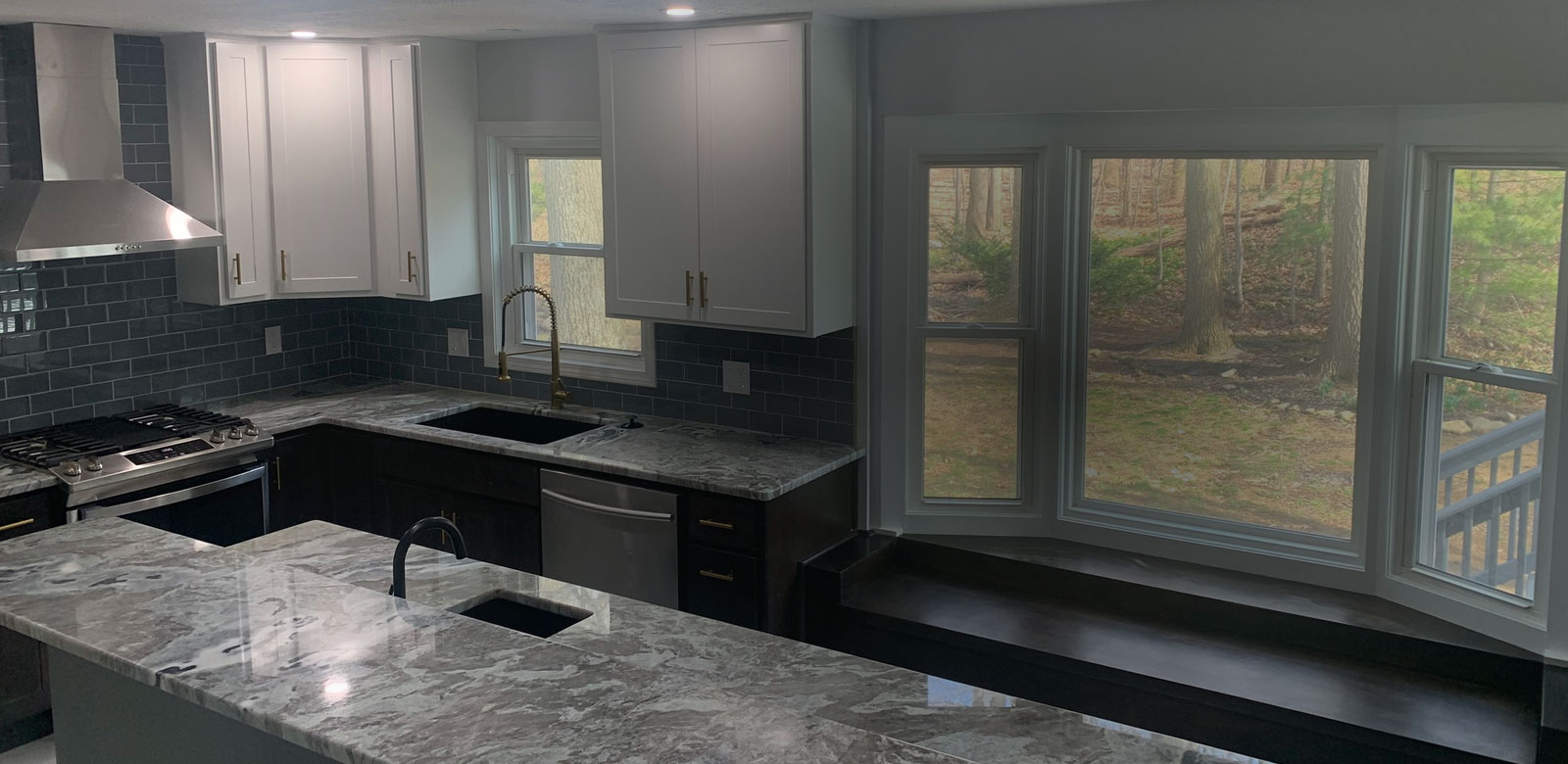
A home we renovated in Copley, Ohio, comes to mind immediately. It was about 3,200 square feet, and nearly the entire house had been severely damaged after the homeowner’s nephew kept pit bulls inside for several years. The damage and odor were overwhelming. With the exception of one bedroom, room after room needed extensive attention, including removal of damaged flooring and baseboards. The homeowner trusted us to bring the property back to a condition she could be proud of and prepare it for sale. We went well beyond surface repairs. We renovated the kitchen and opened a wall, installed a fireplace with a custom mantel and surround, updated the bathrooms, added a bathroom and wet bar in the basement, and rebuilt the deteriorated rear deck. It was an enormous transformation. My recollection is that the homeowner invested around $200,000 in the work, and the house sold for approximately $450,000 in 2021. I don’t tell that story as a promise of resale returns. I tell it because of what the house looked and felt like when we started—and what our team was able to make of it.
10. What do you want Spot-On to be known for in the years ahead?
I want us to change the way people see their homes, feel in their homes and function in their homes. But I also want to change the way people think about contractors. When someone finishes a project with Spot-On, I want them to come away believing that the skilled trades are full of capable, thoughtful, decent professionals. I believe the overwhelming majority of our customers leave with a better impression of what working with a contractor can be. I want us to be known for craftsmanship, certainly, but also for the way we communicate, treat people, explain decisions and take responsibility. If I had to put it into three words, they would be craftsmanship, decency and transparency. That’s what I want our name to mean. And that’s what our tagline, “When Quality Matters,” is supposed to stand for.
See the work behind the words
Learn more about our story and project map, explore layout and design, or see how we approach aging-in-place remodeling. You can also browse the cities we serve.
Ready to talk about your home?
Tell us what you’re planning, and let’s discuss the best way to approach it.
Request a Remodeling Consultation
Or call 330-283-8029
When Quality Matters.