THEN & NOW: TWO CENTURIES OF SHOWER DESIGN
From an early mechanical shower bath to a real Spot-On remodeling project
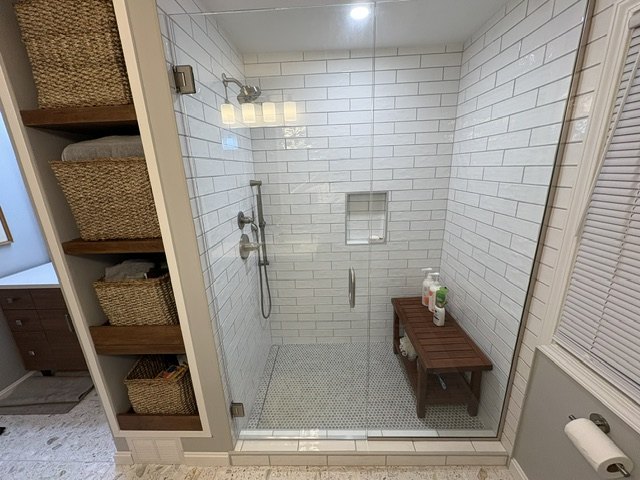
From ancient Greek bathing scenes and Roman waterworks to hand-pumped contraptions and today’s luxurious walk-in showers: the surprisingly inventive history of something we use every day.
Every morning, millions of Americans step into a shower, turn a handle, and enjoy a steady stream of warm water. We rarely stop to consider how remarkable that is.
With a simple movement of the wrist, we can control water temperature and direction. Some showers remember preferred settings. Others imitate rainfall, deliver water from several directions, or offer electronic controls. But the modern shower did not appear overnight.
Its development stretches across thousands of years—from ancient bathing traditions and gravity-fed water systems to mechanical pumps, indoor plumbing, and sophisticated valves. And some of the most repeated stories about who invented the shower deserve a closer look.
Before Plumbing, Nature Provided the Shower
Long before anyone designed a showerhead, people washed in rivers and beneath waterfalls. The principle was straightforward: falling or moving water could rinse the body without requiring a person to sit in a filled basin.
Over time, people reproduced that experience by pouring water from containers. Bathing practices differed widely among societies: sometimes practical, sometimes ceremonial, and sometimes social. What early methods generally lacked was a dependable supply of water flowing to one specific spot—and a way to drain it afterward.
The big idea: A shower is not merely a fixture that sprays water. It is a coordinated system for delivering, controlling, containing, and draining it.
Ancient Greece: Water From Above
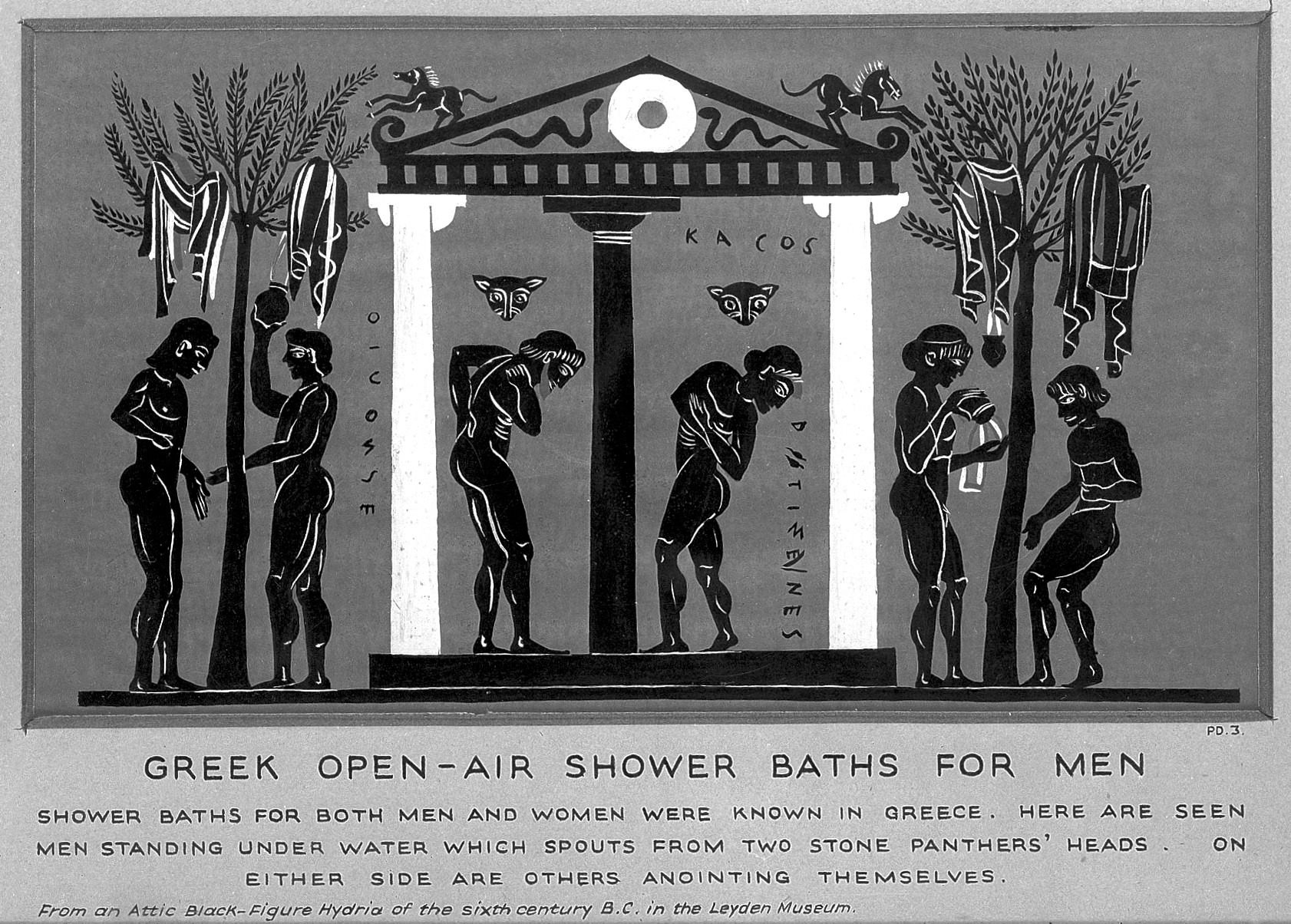
Ancient Greek bathing culture included public facilities associated with athletics and communal life. Archaeological evidence and images of bathers beneath flowing water suggest that people were experimenting with the idea of washing under controlled streams long before household plumbing.
A historical reproduction of a Greek bathing scene helps make this early approach visible. It is useful evidence of how artists depicted bathing, though it should not be mistaken for a photograph or a blueprint of every Greek bathhouse.
The larger breakthrough was learning how to move water through built spaces and carry it away. That is still the central challenge of shower construction, whether the bathroom is in an ancient gymnasium or a home in Cleveland.
Roman Baths: A Triumph of Water Engineering
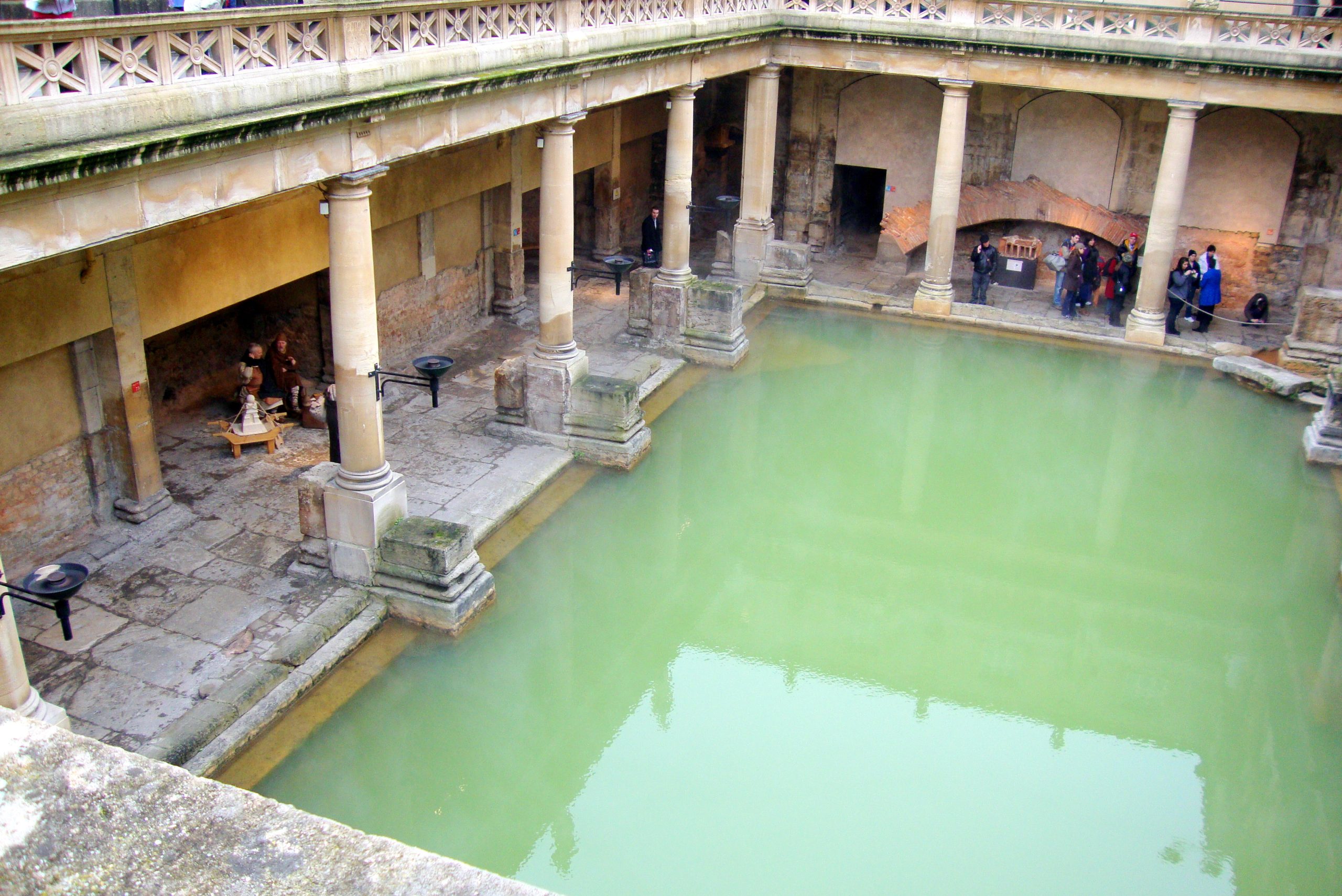
Roman bathhouses were extraordinary feats of engineering and important gathering places. They combined water supply, drainage, heated rooms, and bathing pools at a scale that would have been difficult to imagine in many earlier communities.
Roman engineers built aqueducts, channels, and sophisticated heating arrangements. Their bathing culture emphasized pools and immersion rather than the individual overhead shower familiar to us, but the underlying infrastructure was remarkably advanced.
What Was a Hypocaust?
Roman bathing complexes could use a hypocaust—a system that moved heated air beneath raised floors and, in some designs, through wall spaces. It was not the equivalent of a modern water heater, but it shows how much planning went into comfortable bathing environments.
For homeowners today, the lesson is surprisingly familiar: what makes a bathroom comfortable and durable often depends on work hidden behind finished surfaces. Plumbing, drainage, ventilation, and the underlying construction matter as much as the visible tile.
Who Invented the Shower? The Feetham Question
Many short histories credit an English inventor named William Feetham with inventing a mechanical shower in 1767. The date has been repeated so often that it can sound settled.
The surviving record is more complicated. Historical investigations have pointed to a shower-related British patent associated with Feetham in 1822, raising questions about the widely repeated 1767 patent claim. This does not establish that no earlier shower device existed, nor does it settle who should receive sole credit for the invention.
For an article that aims to be useful to researchers as well as homeowners, the responsible approach is to distinguish a popular historical attribution from what particular patent records document. A helpful starting point is the historical investigation A History of Showers; the patent citation should be independently checked against a primary patent catalogue before final publication.
Historical fact-check: We should not print “Feetham patented the shower in 1767” as an undisputed fact. The article will preserve the uncertainty and cite the evidence behind it.
Early Mechanical Showers: Clever, Complicated, and Sometimes Unpleasant
Early mechanical shower-baths could use a hand pump to move water into an elevated container. Gravity then returned it over the person bathing. Some designs collected and reused the same water, which made them mechanically ingenious but not particularly appealing by modern hygiene standards.
These contraptions could be tall, ornate, and cumbersome. Instead of stepping into a tiled enclosure and turning a handle, a person might have to operate a pump or arrange for water to be carried and heated.
The Regency-Era Shower
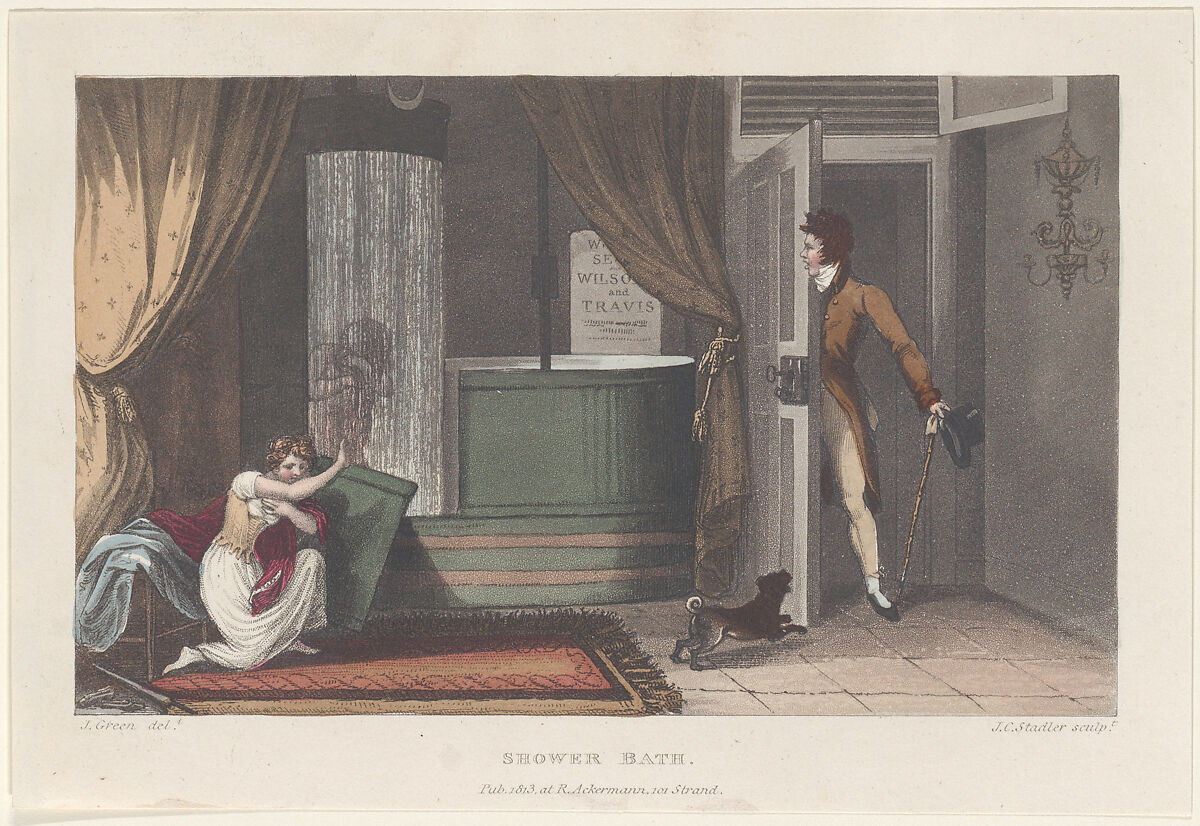
In the early nineteenth century, elaborate shower-bath apparatuses became fashionable curiosities. Designs sometimes featured tall pipes and decorative structures. Period illustrations, including an 1813 Shower Bath (1813), help us understand how unusual these early systems looked.
Historical artwork for final installation: An 1813 print, Shower Bath (1813), Metropolitan Museum of Art. This museum record will be used to obtain the approved image file and verify its reuse status. It is intentionally a source card here rather than an unverified image.
The remarkable thing about these devices is the problem they were trying to solve: how to deliver a steady stream of water overhead without a modern pressurized water supply. Their awkwardness makes today’s shower seem like a small miracle.
The Nineteenth Century: When Showers Became Practical
As municipal water systems, indoor plumbing, and water heating improved, showers became less dependent on manual labor. Water could arrive through permanent pipes, and used water could leave through dedicated drains.
Showers also served practical needs beyond private luxury. In 1872, French physician François Merry Delabost developed shower arrangements for prisoners in Rouen, France, to make group washing more efficient. His work is often discussed in histories of institutional bathing.
That history helps explain why shower development was driven by several pressures at once: hygiene, efficiency, limited space, and convenience—not simply the desire for an indulgent bathing experience.
The Twentieth Century: The Shower Comes Home
As indoor plumbing became more widespread in American homes during the twentieth century, the bathroom increasingly became a dedicated room with a sink, toilet, and bathing fixture.
Showers offered advantages that fit changing household routines. They could be quicker than filling a bathtub, occupy a relatively compact area, and suit busy schedules. Manufacturers improved showerheads, valves, and the reliability of water delivery.
Eventually the question changed. Instead of asking whether a house could accommodate a shower, homeowners began deciding what kind of shower best suited their lives.
A Brief Timeline of Shower Innovation
Bathing beneath flowing water and the development of organized bathing facilities.
Increasingly sophisticated water supply, bathing infrastructure, and drainage.
Mechanical shower-baths and elaborate hand-pumped apparatuses appear in historical illustrations.
Indoor plumbing and institutional shower facilities expand the practical uses of showers.
Residential showers become more familiar as plumbing and hot-water systems spread.
Pressure-balancing valves, thermostatic controls, handheld sprays, rainfall heads, digital controls, and advanced waterproofing systems.
The Most Important Innovation May Be Behind the Wall
A modern shower is not defined only by its showerhead. One of its most important components is usually hidden behind the finished wall: the valve that controls the flow and mixing of hot and cold water.
Pressure-Balancing Valves
A pressure-balancing valve responds to changes in the relative pressure of hot and cold supplies. Its purpose is to help reduce sudden temperature changes when other fixtures in the home are used—for example, when someone flushes a toilet while another person is showering.
Thermostatic Valves
A thermostatic valve regulates the hot-and-cold mixture to help maintain a selected water temperature. Depending on the model, temperature and volume may be controlled separately.
These technologies have transformed shower comfort and safety. Homeowners choosing new fixtures should understand the differences between them and discuss compatibility with their plumbing system. Official Moen and Delta Faucet product documentation can help compare particular valve models.
From One Showerhead to a Personal Spa
Rainfall Showerheads
Rainfall showerheads are designed to spread water over a broad area, often with an overhead installation. Their visual appeal is undeniable, but a larger showerhead does not automatically mean stronger spray. Performance depends on the fixture and available water flow.
Handheld Showerheads
A handheld shower is one of the most practical additions to many bathrooms. It helps with rinsing, cleaning, bathing children, and accommodating users with changing mobility needs.
Multiple Outlets and Body Sprays
A shower combining an overhead head, handheld unit, and body sprays may feel luxurious, but the design must account for the plumbing system’s available pressure, flow, and hot-water capacity. More outlets do not guarantee better results.
Digital Controls
Digital shower systems can offer electronic adjustments and, on some models, saved preferences. The technology is new, but the goal is ancient: get water where you want it, at a comfortable temperature.
The Work Behind the Finish: Waterproofing Matters
The most important developments in modern showers are not always visible. Beneath attractive tile and glass are systems designed to manage water and protect the structure.
A shower must direct water to its drain while preventing moisture from damaging surrounding materials. The shower base, wall waterproofing, corners, transitions, penetrations, and drainage all deserve careful attention.
Tile and grout are finish materials; grout alone is not a shower waterproofing system. Homeowners should understand what lies behind the finish before comparing bids based only on tile selection and fixture brands.
Our detailed guide to traditional mortar pans, KERDI, and GoBoard shower waterproofing explains several approaches used in modern shower construction.
Spot-On project-photo placement: This is where a two- or three-image gallery of your actual shower framing, waterproofing, niche, bench, and finished tile would be especially effective. No project photo is represented as installed until its original file is available and verified.
Choosing a Shower for Your Home in 2026
Thousands of years of invention have given homeowners more choices than ever. The best shower, however, is not necessarily the one with the most features. It is the one that works well for the people who use it.
| Design decision | Why it matters |
|---|---|
| Shower dimensions | Influence comfort, movement, and available space. |
| Valve type | Affects temperature control and day-to-day use. |
| Rainfall vs. handheld | Balances coverage, flexibility, and convenience. |
| Bench or seating | May improve comfort and accessibility. |
| Storage niche | Creates convenient storage without hanging accessories. |
| Entry design | Impacts accessibility and available floor space. |
| Waterproofing | Protects the structure beneath the finished surfaces. |
| Tile selection | Affects maintenance, appearance, and surface characteristics. |
| Drainage | Helps water move reliably away from the shower floor. |
If you are planning to stay in your home for many years, consider how your needs might change. A handheld shower, well-planned entrance, practical storage, and thoughtfully located controls can be valuable long after a trendy finish has gone out of fashion.
What Comes Next?
Shower design continues to evolve through digital controls, water-use monitoring, accessible layouts, and increasingly customizable fixtures. At the same time, many homeowners are moving toward simpler designs: uncluttered glass, large-format tile, and carefully chosen fixtures.
Technology may change, but the fundamentals remain the same. Water must arrive at a comfortable temperature. It must drain properly. And the surrounding structure must remain protected.
From Ancient Waterfalls to Your Bathroom
The shower’s history is a story of people trying to make ordinary life more comfortable. Ancient communities learned to channel water. Inventors experimented with pumps and overhead tanks. Engineers refined indoor plumbing. Manufacturers developed valves and fixtures that made bathing easier and more predictable.
Yet the underlying idea is wonderfully simple: water falls, we step beneath it, and a routine part of the day becomes a moment of comfort.
Thinking About a New Shower? Explore Our Remodeling Services
Spot-On Home Improvements helps homeowners throughout Cleveland, Akron, and surrounding Ohio communities make informed kitchen and bathroom remodeling decisions. From a tub-to-shower conversion to a complete bathroom renovation, our goal is to help you make the smartest decision for your home—even if you don’t hire us.
Explore Our Walk-In Shower Remodeling Services · Bathroom Remodeling · Plan Your Bathroom Layout · Read our waterproofing guide
When Quality Matters.
Frequently Asked Questions
Who invented the modern shower?
No single inventor can be credited with every part of the modern shower. William Feetham is frequently mentioned in early shower histories, but the widely repeated patent date requires careful verification against surviving records.
Did ancient Greeks have showers?
Historical bathing scenes depict people washing beneath flowing water. These facilities differed substantially from modern private residential showers.
Did Romans invent the shower?
Roman engineers developed sophisticated bathing infrastructure, but their famous public bathhouses largely emphasized pools and immersion bathing.
When did showers become common in American homes?
They became increasingly familiar during the twentieth century as indoor plumbing and dependable hot-water systems spread.
Is a rainfall showerhead better?
Not necessarily. It offers a different spray experience; the best choice depends on preferences, the specific fixture, and the plumbing system.
Does grout waterproof a shower?
No. A properly designed and installed waterproofing system is needed behind or beneath shower finishes.
Historical Sources and Further Reading
For additional historical context, explore the Metropolitan Museum of Art’s 1813 shower-bath artwork, the Wellcome Greek bathing image record, the Roman Baths museum, and the historical investigation of shower invention claims.